Abstract
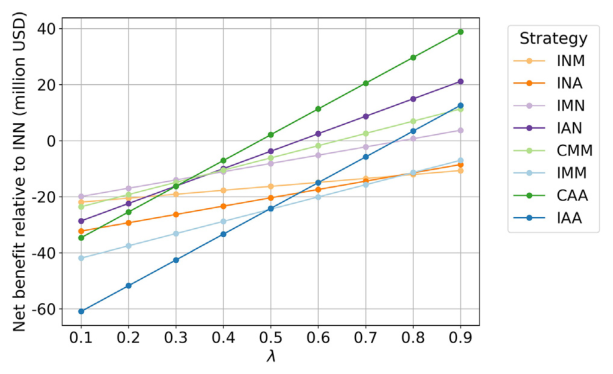
Electric power and broadband have become essential services for modern economies, but utilities face substantial challenges in providing disruption-free access. Recent legislation, including the US Infrastructure Investment and Jobs Act of 2021, has allocated enormous resources toward improving infrastructure systems. Historically, undergrounding has enhanced system reliability but has been cost effective only in densely populated areas. We investigate the conditions under which undergrounding becomes cost effective, particularly when co-deployed with fiber optic lines. We introduce a novel data-driven cost-benefit model and conduct a detailed localized case study in Shrewsbury, Massachusetts. The results indicate that when undergrounding is viable, aggressively co-undergrounding yields the highest net benefit. This finding is robust across various assumptions. Importantly, our model highlights the importance of assumptions regarding undergrounding’s effectiveness in reducing outages. Our model is readily deployable to other study areas, providing effective decision-making capabilities even with limited data.