Abstract
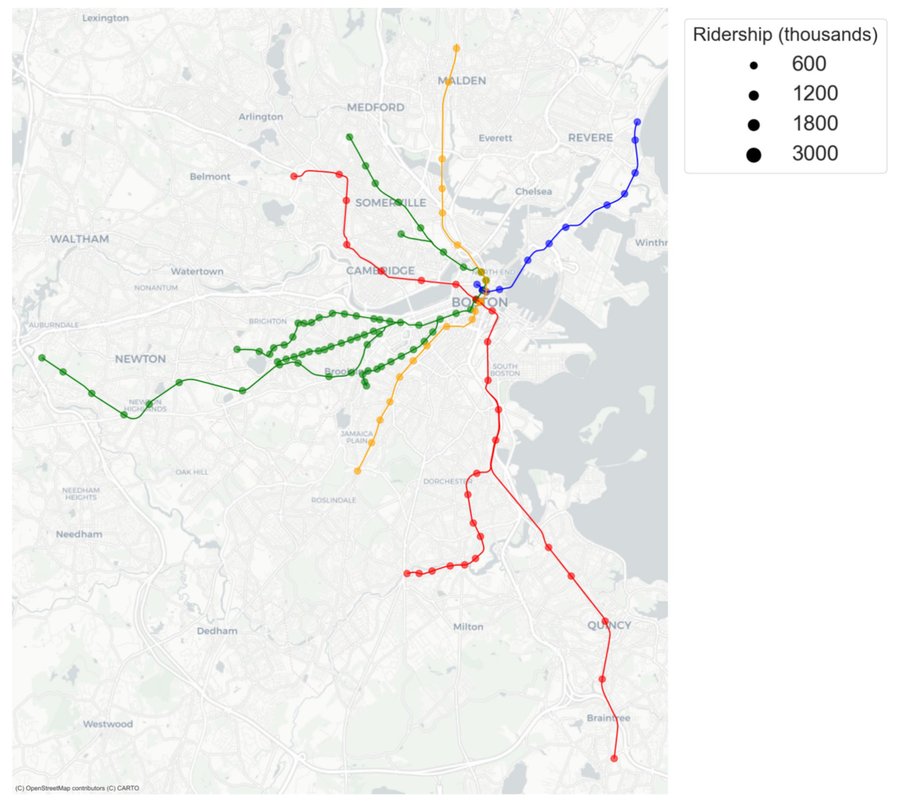
Urban Rail Transit (URT) systems play a critical role in modern cities but consume significant amounts of energy. Understanding and predicting energy consumption patterns in these systems is vital for sustainable urban planning and cost-effective decision-making. This study develops a comprehensive framework for forecasting energy consumption based on planning metrics, ridership data, and historical energy and weather, using the Massachusetts Bay Transportation Authority (MBTA)’s URT system as a case study. The fitted eXtreme Gradient Boosting (XGBoost) model demonstrated high predictive accuracy, with a mean absolute percentage error (MAPE) of 3.3%, while ridge regression models reliably forecasted ridership and temperature to support future planning. We further evaluated eight operational plans under nine ridership–temperature scenarios. Each plan represents a set of operational adjustments that may be pursued to regulate service conditions or respond to disruptions. These analyses highlight the model’s capability to provide insightful forecasts that inform decision-making processes and optimize energy usage, thereby supporting sustainable and efficient urban rail transit operations.